When God Says “Hold My Beer”
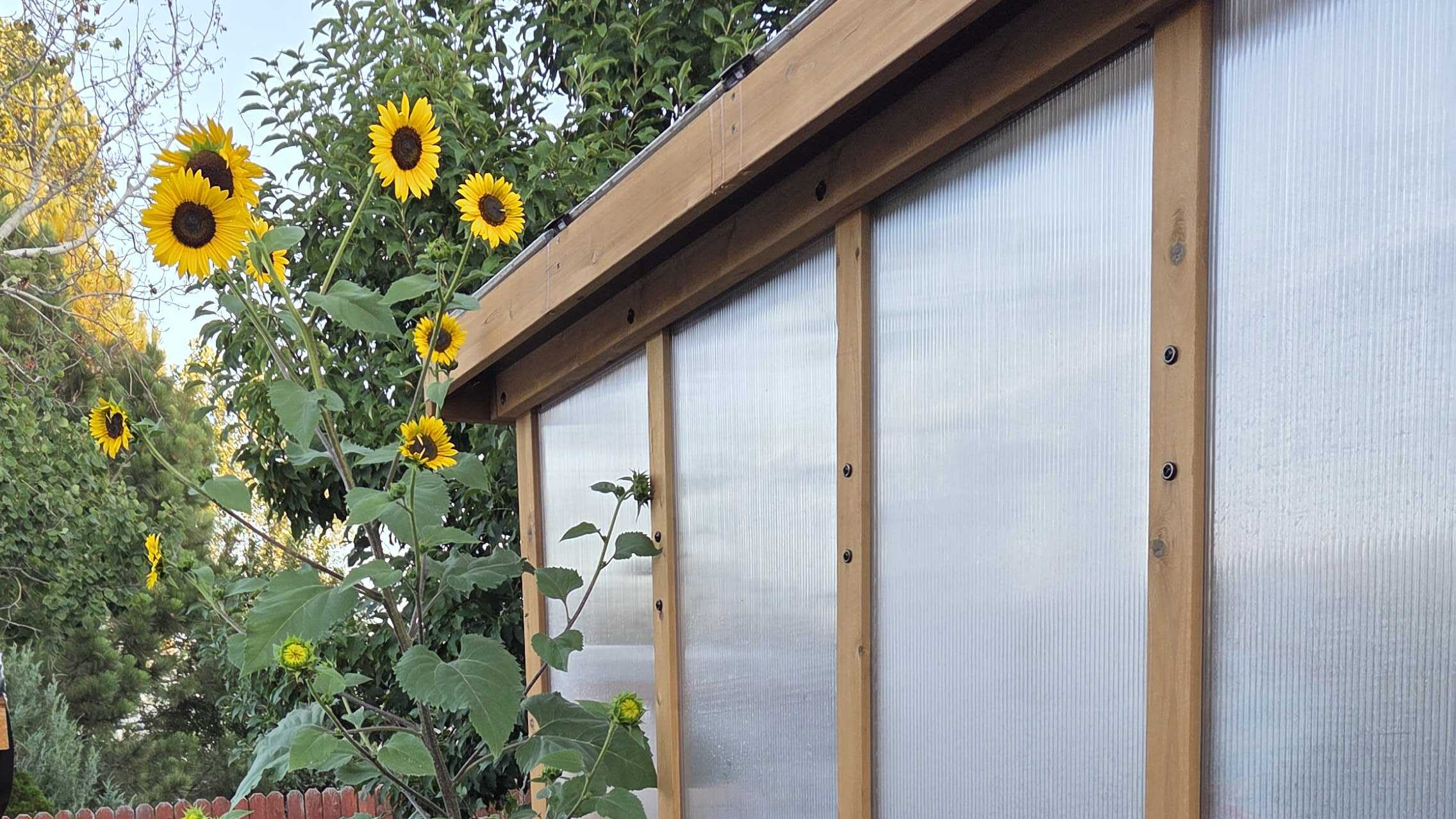
What a sunflower taught me about surrender, timing, and leaving room for the unexpected.
Manifestation is not about controlling every step of the outcome. It’s about planting the seeds, doing the daily work, and leaving enough space for God to surprise you.
I’ve had this vision of using sunflowers as natural shade for my chickens. In my mind, it was perfect: a cheerful wall of sunflowers between the greenhouse and the chicken coop, buzzing with bees, birds, and squirrels. It would bring in pollinators, help the soil, offer the chickens a little shade, and maybe invite some bugs for them to snack on.
Basically, I would be zen with the Universe, living out my Snow White moment in harmony with nature and small woodland creatures doing my bidding.
A very practical garden dream. Also whimsically ambitious, I will admit. But that has never stopped me before. I could make friends with a murder of crows to bring me presents and warn me of predators. It could happen.
I have grown sunflowers around the greenhouse before, and when they work, it looks amazing. Until, of course, you can’t actually get to the chicken coop because giant sunflowers have decided they own the entryway now.
Nature gives. Nature takes over the path.
Every year, I try to move seedlings around and create either a sunflower wall or a private little patch. Every year, it comes out differently. Sometimes what I plant takes root and grows beautifully, even if a little overwhelmingly. Sometimes nothing happens at all. And sometimes, despite my best efforts, God, Source, the Universe — however you understand that presence — seems to have other ideas.
This year, I had a vision. I planted sunflowers in a couple of different spots where I imagined them growing. I also let some pop up naturally where they wanted to grow, because I am learning that volunteer plants obviously know things I don’t.
The sunflower wall I had in mind was a challenge from the beginning. The sun felt especially intense, and the seedlings I moved kept withering in the heat. Even in areas where other sunflowers were sprouting under similar conditions, anything I touched seemed to struggle.
It was a humbling lesson in this: you can have a vision, but that does not mean you get control.
The space between the chicken coop and the new greenhouse was especially frustrating. The dogs had apparently decided this was a high-traffic route through the yard and had no intention of respecting my sunflower dreams. Dogs have no vision for landscaping.
I planted seedling after seedling, seed after seed, hoping something would grow. Despite my best efforts, they were sun-scalded, trampled, or both.
Eventually, I gave up. Not in a dramatic way. More in an “okay, that’s obviously not gonna work” gardener way. I stopped trying to force that one spot to become what I wanted it to be, and I adjusted my focus to the rest of the garden. I kept watering. I fertilized what was growing. I thinned areas where the sunflowers were too dense. I supported what was already alive. Basically, I stayed in the daily discipline of tending the garden, but released the idea that I controlled the outcome. I stopped forcing the one spot that wasn’t working and kept tending what was.
Then one day, I noticed something. A small sunflower plant had come up from a crack under the greenhouse, in a tiny sliver of dirt between the foundation and the greenhouse. At first, it was just an unexpected surprise. I remember thinking, of course a sunflower would pop up in the most unlikely spot. And then I mostly ignored it and kind of forgot about it.
A few weeks later, I was walking my garden and noticed it was not little anymore. It had become this huge native sunflower with multiple arms full of flower heads, the largest and prettiest sunflower in my entire yard.
It was growing exactly where I had wanted sunflowers in the first place, but not in the place where I had planted them. I had tried over and over again to create a sunflower wall in this area, and all my best efforts failed. Then one sunflower I didn’t plant volunteered from a crack and offered almost as much shade and beauty as the whole wall I had been fighting to make.
It was very humbling. Very much, “That’s cute. Now hold my beer.”
The funny thing is, I wasn’t even directly watering this sunflower, because I didn’t know it was there. But the water I was giving to the area around it was enough to overflow into that space. The soil, the moisture, the environment — all the conditions I had been building around it — were enough.
And if I’m honest, if I had noticed it too early, I probably would have over-loved it. Probably smothered it with my overly enthusiastic “help.” Instead, because I left it alone, it got to grow uninterrupted.
It had the benefit of my discipline without the burden of my control, and I think that is the subtle point.
Manifestation is not about getting every detail right. It is not about planning, overanalyzing, and forcing every possible path into compliance. Sometimes we set intentions, make plans, do the work, and wait. The desire may be real, but the path we keep trying to force may not be how it is meant to arrive.
Sometimes we are so focused on one spot that we miss the miracle growing three feet to the left.
To me, manifestation is about setting the intention, doing the daily work that supports it, and then letting go of the exact way it has to unfold. If we cling too tightly to the path, we can end up limiting the ways God can show up and surprise us.
This has happened in my life outside the garden too. It has shown up in saying yes to a job I never expected, and then saying yes to the opportunities that appeared because of it. A paralegal position eventually put me on the path to Green School and helped me discover a deeper passion for gardening. That alone changed the trajectory of my life.
That season gave me tools I didn’t know I needed. It opened doors I didn’t know existed. It gave me knowledge that changed the way I gardened and even the way I saw myself. The job only lasted about two and a half years, but it created off-ramps and openings I could not have imagined when I accepted it.
The path did not look like what I would have designed, but it gave me more than the narrow version of what I thought I wanted. The daily discipline mattered. The openness mattered too. Discipline gave me the freedom to flow when the opportunity presented itself.
Back to the sunflower. I had been tending the garden and applying what I learned. I had been watering, feeding, observing, adjusting, and creating conditions where life could happen. That volunteer sunflower was not random in the sense that it grew in the ecosystem I had been tending. But I did not control it. I did not choose the crack it came through. I had nothing to do with the timing or the way it would grow. I simply created life around it, and something unexpected had room to thrive.
That is the balance I keep trying to understand. Surrender is not laziness. It is releasing the illusion that we control every detail. There is a difference between doing nothing and leaving room.
I have seen this lesson repeat in the garden many times. Before I had any education behind my gardening, I mostly ran on instinct and enthusiasm. One year, I planted dill in a raised bed. It grew fairly well, maybe two feet tall. I harvested it, watched caterpillars feast on it, and let it go to seed. The next year, a volunteer dill plant grew out of the cracks in the brick floor of my greenhouse setup. I didn’t mess with it. I didn’t even know what it was at first.
That dill plant grew about four feet tall. It looked more like a tiny tree than an herb. It was the strongest dill plant I have ever seen.
Naturally, I have been trying to recreate that same magic ever since by dropping seeds into cracks and old logs. So far? Nothing. Which feels like God gently saying, “You’re missing the point.”
Sometimes life needs time to grow. The thing that grows naturally cannot always be forced into arriving on command or by a foolproof formula. It is a relationship between preparation, timing, environment, and enough trust to surrender.
The garden keeps teaching me through the seasons too. Summer is when growth is at its height. Fruit ripens, flowers bloom, and everything feels alive and demanding. Fall brings harvest, but also the winding down. Winter is dormancy. It can look like nothing is happening at all, but underneath the surface, life is still moving. Roots are resting. Soil is changing. Organic matter is breaking down. The microbiome is doing its quiet, unseen work.
Some seeds even need the deep freeze to wake up what is hidden inside them. Then spring comes. The sun warms the soil, something breaks through the dark, and the cycle continues.
From the outside, it might look like nothing is happening. It might even look like failure. But sometimes the most powerful work is happening beneath the surface.
That is what the volunteer sunflower reminded me. I had a vision. I did the work. I tried. I failed in the exact way I wanted it to happen. Then something grew from a place I had overlooked. Not because I controlled it perfectly, but because I stayed with the discipline, applied the knowledge I had earned as best I could, and left myself open to the lesson.
Maybe that is the practice. Do the work. Water what is alive. Learn what you can. Rest when you need to. Let go of the illusion that you get to control where every miracle appears in your life.
Sometimes it shows up in a crack under the greenhouse.
And when God says, “Hold my beer,” maybe the best thing we can do is step back and see what grows.